
St. Catharines Long-Term Disability Lawyer
Find out if you have a case today.
Contact our St. Catharines long-term disability lawyers for a free consultation if you have legal questions regarding your long-term disability claim.

Book a FREE Consultation
Tell us what happened
We’re here to help.
Do you live in St. Catharines? Here’s how we can help:
Table of Contents
Published: January 9, 2021 | Last Reviewed: September 10, 2026
No one is ever truly prepared for a serious illness or injury. Accidents can happen unexpectedly, and even people who have lived healthy lives can develop chronic illnesses, disabling physical conditions, or debilitating mental health disorders.
When a medical condition makes it impossible for someone to continue carrying out the duties of their job, the financial consequences can be substantial.
Depending on their insurance coverage, some people who can no longer work because of an injury, illness, or mental health condition may qualify for long-term disability benefits.
If your insurer has denied, delayed, or terminated your benefits, our St. Catharines long-term disability lawyers can review your policy, the insurer’s reasons, and the evidence supporting your disability.
Key Takeaways: St. Catharines LTD Claims
- Eligibility for LTD benefits is determined primarily by the wording of the applicable insurance policy and the supporting evidence.
- LTD coverage may be available through an employer group plan or an individual disability insurance policy.
- Insurers can deny claims because of disputes over medical evidence, policy definitions, deadlines, exclusions, or the claimant’s ability to work.
- Many LTD policies change their definition of disability after a specified period, commonly from an “own occupation” test to an “any occupation” test.
- An insurer’s internal appeal is not necessarily the only option after a denial, and limitation periods should be reviewed before deciding how to proceed.
LET US PUT OUR EXPERTISE TO WORK FOR YOU
Tell Us What Happened
Since 1959, we’ve helped thousands of Canadians get the compensation they deserve with their long-term disability claims. One of Canada’s oldest personal injury law firms, personal injury law is exclusively what we do. Book a free consultation today with our top-rated personal injury lawyers.
Our team is available 24/7 to speak with you.

How Long-Term Disability Benefits Work in St. Catharines
Some employees have LTD coverage through workplace group insurance plans. Other people purchase individual disability insurance independently.
Long-term disability benefits are intended to provide income support when a qualifying medical condition prevents a policyholder from working for an extended period.
The Financial Consumer Agency of Canada explains that disability insurance can replace part of a person’s income when illness or injury prevents them from working.
The amount payable depends on the policy. Some policies replace a percentage of pre-disability income, often subject to a monthly maximum and other contractual terms.
Our guide to how LTD monthly payments are calculated provides additional information about how benefit amounts can be determined.
What Medical Conditions May Qualify for LTD Benefits?
There is no universal list of conditions that automatically qualify someone for long-term disability benefits.
The central question is generally whether the claimant satisfies the policy’s contractual definition of disability.
Conditions that may interfere with someone’s ability to perform occupational duties can include:
- Chronic pain
- Complex regional pain syndrome
- Back and neck injuries
- Spinal cord injuries
- Neurological conditions
- Paralysis
- Traumatic amputations
- Cancer
- Autoimmune disorders
- Post-traumatic stress disorder
- Depression
- Anxiety disorders
- Cognitive impairments
- And other serious illnesses or injuries
A diagnosis alone may not establish entitlement. Insurers commonly examine how symptoms affect the claimant’s ability to perform the essential duties of their occupation.
Why Do Insurers Deny LTD Claims?
Unfortunately, not all claims for long-term disability benefits are initially approved.
Insurance companies may deny an LTD claim for reasons including:
- The insurer considers the supporting medical evidence insufficient
- The claim or supporting documents were submitted late
- The insurer argues there is no sufficiently objective evidence of disability
- The medical condition does not meet the policy’s definition of disability
- The policy contains an exclusion or limitation
- A pre-existing condition clause is raised
- The insurer believes the claimant can perform their occupation
- The claimant did not attend an insurer-requested examination
- Surveillance or social-media evidence is relied upon
- The insurer believes treatment recommendations have not been followed
- And other policy-specific reasons
Conditions such as chronic pain and some mental health disorders may be especially difficult because symptoms are not always visible on diagnostic tests. Our article on LTD claims involving invisible injuries and illnesses discusses this issue in greater detail.
What Is the “Own Occupation” and “Any Occupation” Test?
Many LTD policies do not use the same definition of disability throughout the entire claim.
During an initial benefit period, the policy may consider whether the claimant is unable to perform the essential duties of their own occupation.
After a specified period, often around two years, although policy language varies, the definition may change. The insurer may then consider whether the claimant can perform another occupation for which they are reasonably suited by education, training, or experience.
This transition is sometimes called the “change of definition.”
An insurer may therefore approve LTD benefits initially and later terminate them when it believes the claimant no longer satisfies the new contractual test.
The exact wording of the policy is critical.
What Evidence Can Support an LTD Claim?
Medical evidence is a central part of most disability claims, but a persuasive LTD file may involve more than a diagnosis.
Relevant evidence can include:
- Family doctor records
- Specialist reports
- Diagnostic testing
- Treatment records
- Medication history
- Functional assessments
- Psychological or psychiatric reports
- Occupational therapy assessments
- Workplace demands
- Job descriptions
- Employer records
- Evidence about unsuccessful return-to-work attempts
- Statements describing functional limitations
An insurer may want to know not merely whether someone has a diagnosed medical condition, but what the person can and cannot reliably do in a work environment.
Consistency between medical evidence, reported symptoms, functional restrictions, and occupational requirements can therefore become important.
LTD Claims After an Accident in St. Catharines
Some LTD claims begin after an unexpected accident.
A St. Catharines resident injured in a collision may have a personal injury or auto-insurance claim in addition to LTD coverage through work or a private disability policy.
Our St. Catharines car accident lawyers address claims involving motor vehicle collisions, while our St. Catharines personal injury lawyers assist with broader negligence claims.
Likewise, someone who develops a disabling condition after being injured on dangerous premises can review information from our St. Catharines slip and fall lawyers.
These claims are legally distinct. An LTD claim is primarily contractual and focuses on the disability insurance policy, while a negligence claim focuses on whether another party caused compensable injuries.
What Can You Do After an LTD Denial?
Receiving a denial letter can be stressful, particularly when employment income has already stopped.
An important first step is to review exactly why the insurer says benefits are not payable.
The denial letter may identify missing evidence, policy provisions, medical opinions, or other reasons for the decision. The insurance policy should also be reviewed to determine the applicable definition of disability, exclusions, proof-of-loss requirements, appeal provisions, and deadlines.
Some insurers invite claimants to pursue an internal appeal. An internal appeal can be appropriate in some cases, particularly where meaningful new evidence is available, but it is not necessarily the only option.
A lawsuit may sometimes be considered instead.
Before spending significant time on repeated internal appeals, it can be important to understand the applicable limitation period and how the chosen strategy could affect legal rights.
What Compensation May Be Pursued in an LTD Dispute?
Depending on the facts and legal basis for the claim, a lawsuit against an LTD insurer may seek amounts such as unpaid disability benefits and other contractual amounts that should have been paid under the policy.
Other damages may sometimes be claimed where legally supported by the insurer’s conduct, but they are not available simply because a claim was denied.
Punitive or aggravated damages, for example, require legal and evidentiary foundations beyond an ordinary disagreement over coverage.
St. Catharines Long-Term Disability FAQs
How Much Does LTD Insurance Pay?
The amount depends on the insurance policy.
Many policies replace a percentage of pre-disability earnings and impose a monthly maximum. Other income sources may also affect the amount payable if the policy contains offset provisions.
Can My LTD Claim Be Approved for a Mental Health Condition?
Potentially. Depression, anxiety, PTSD, and other mental health conditions can be disabling.
Eligibility depends on whether the condition satisfies the policy’s disability definition and whether the medical and functional evidence supports the claim.
What If My Insurer Says There Is No Objective Evidence of My Disability?
Some disabling conditions cannot be demonstrated through a single blood test, scan, or other objective measurement.
Medical records, consistent treatment, specialist reports, functional evidence, medication history, and evidence of occupational limitations may all become relevant.
Can My Insurer Cut Off LTD Benefits After Two Years?
Potentially, depending on the policy.
Many LTD policies change the contractual definition of disability after a specified period. An insurer may reassess whether the claimant can perform another suitable occupation, but termination is not automatically justified simply because that date has arrived.
Do I Have to Participate in an Independent Medical Examination?
Many disability policies contain provisions requiring reasonable participation in medical examinations requested by the insurer.
Whether a particular request is authorized and reasonable depends on the policy and circumstances.
Can I Receive LTD Benefits and Make a Personal Injury Claim at the Same Time?
Potentially. They are different types of claims.
A personal injury claim may seek compensation from a party who caused an injury, while an LTD claim seeks contractual benefits from an insurer. Coordination and offset issues can arise depending on the policy and the compensation received.
Should I Appeal an LTD Denial or File a Lawsuit?
That depends on the circumstances.
An internal appeal may be useful when significant new evidence can address the insurer’s reasons for denial. In other situations, litigation may be more appropriate. Limitation periods should be considered before repeatedly appealing internally.
Contact a St. Catharines Long-Term Disability Lawyer
A denied or terminated LTD claim can place substantial financial pressure on someone who is already dealing with a serious medical condition.
Our St. Catharines long-term disability lawyers can review the policy language, insurer correspondence, medical evidence, occupational demands, and potential options for challenging the decision.
To discuss your situation in a free initial consultation, contact Preszler Injury Lawyers or call 1-888-608-2111.
Authored by Preszler Injury Lawyers
Personal Injury Law Firm
Preszler Injury Lawyers represents injured people across Ontario in personal injury matters, including motor vehicle accident claims, slip and fall claims, long-term disability claims, and institutional abuse claims.
Proudly Canadian
Award Winning Personal Injury Law Firm
We are proud to be one of Canada’s oldest and long-standing personal injury law firms. Since 1959, we have been providing exceptional legal services and have established ourselves as leading personal injury lawyers in the Canadian legal community. It’s not just the awards that recognize our achievements, but also the wins we’ve achieved for thousands of Canadians with their long-term disability claims.



Case Results
long-term disability Settlements
Please note that past results are not indicative of future results as each scenario presents itself with its unique set of circumstances. But here are some long-term disability related wins we’ve had for our clients.
Our 5 Star Reviews on Google
B.H.

These Wonderful People Worked Hard For Me, I Give So Much Thanks, Great To Talk To, Also Very Kind, I Recommend Very Much, They Will Fight For You. They Have A Heart ❤️ Thanks Joseph, Pleasure To Have You As My Lawyer. Thanks To Your Whole Team.
A.B.
David and the team were very professional and helped me with my success with my claim. Thank you all. I will recommend your firm.
N.R.
Preszler Injury Lawyers has been instrumental in helping me on my road to recovery after a car accident in 2021. I highly recommend this team of amazing injury lawyers. Thank you Joey Fearon for all that you do.
A.D.
Dealing with Mark Freeman was a huge relief. Great communication from day one, all the way through to the end. Very happy with his help and would recommend to any in need.
E.C.
Excellent service and consistent communication made the experience much less stressful. Every question was answered promptly and clearly.
D.A.
The lawyers handled our matter with care, patience, and attention to detail. We always felt supported and respected.
M.D.
This firm handled my case with great care and professionalism.
K.C.
The staff here made a difficult situation feel much easier to manage.
M.R.
They treated my case seriously and guided me through every step with patience and professionalism.
K.A.
The professionalism shown by everyone in the office was impressive from day one.
More long-term disability Topics
Here’s more information on long-term disability related topics that we think you might find helpful.

long-term disability
|
August 11, 2026
Most Common Types of Disability Claims in Canada (2026)
Disability Claims in Canada: Key Takeaways The most common disability types reported by ESDC relate to pain (9.7%), flexibility (7.6%), mobility (7.2%), and mental or…

long-term disability
|
January 21, 2026
Understanding the “Own Occupation” Clause in Long-Term Disability Insurance Benefits
The “own occupation” clause in long-term disability insurance defines a period, usually the first two years of a claim, where benefits are paid if you…

long-term disability
|
January 21, 2026
What Happens When Your LTD Benefits Are Terminated After Years of Approval?
When long-term disability (LTD) benefits are terminated after years of approval, it usually signals that the insurance company believes you no longer meet the specific…
Download Our "Long-Term Disability Appeals" E-Book
Here’s an e-book you might find useful if you’re interested in learning more about how long-term disability claims work.
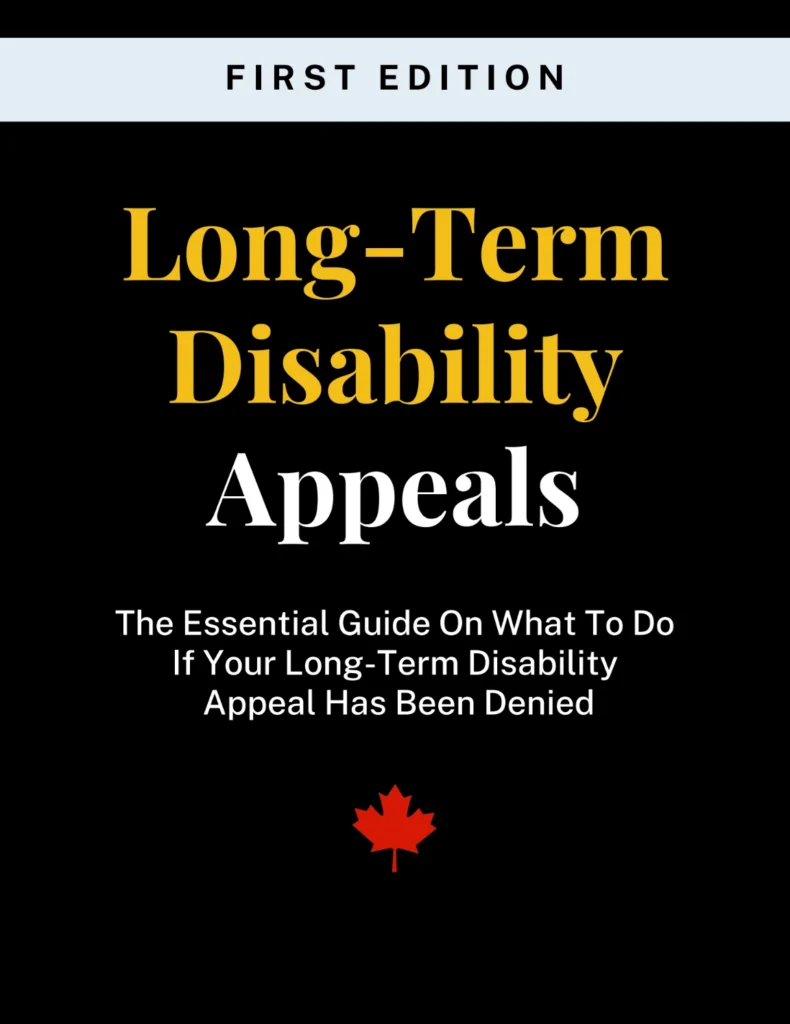
In this ebook, you’ll learn:
- The difference between an internal appeal and a lawsuit
- How the LTD appeals process typically works in Ontario
- What evidence you can gather to strengthen your appeal
- How to respond to insurance company requests and other tactics they might use
- What deadlines may apply to your appeal
- The benefits of working with an LTD lawyer when you need to appeal your denied claim
- And more
Download Our "I’m Approaching Change of Definition" E-Book
Here’s an e-book you might find useful if you’re interested in learning more about how long-term disability claims work.
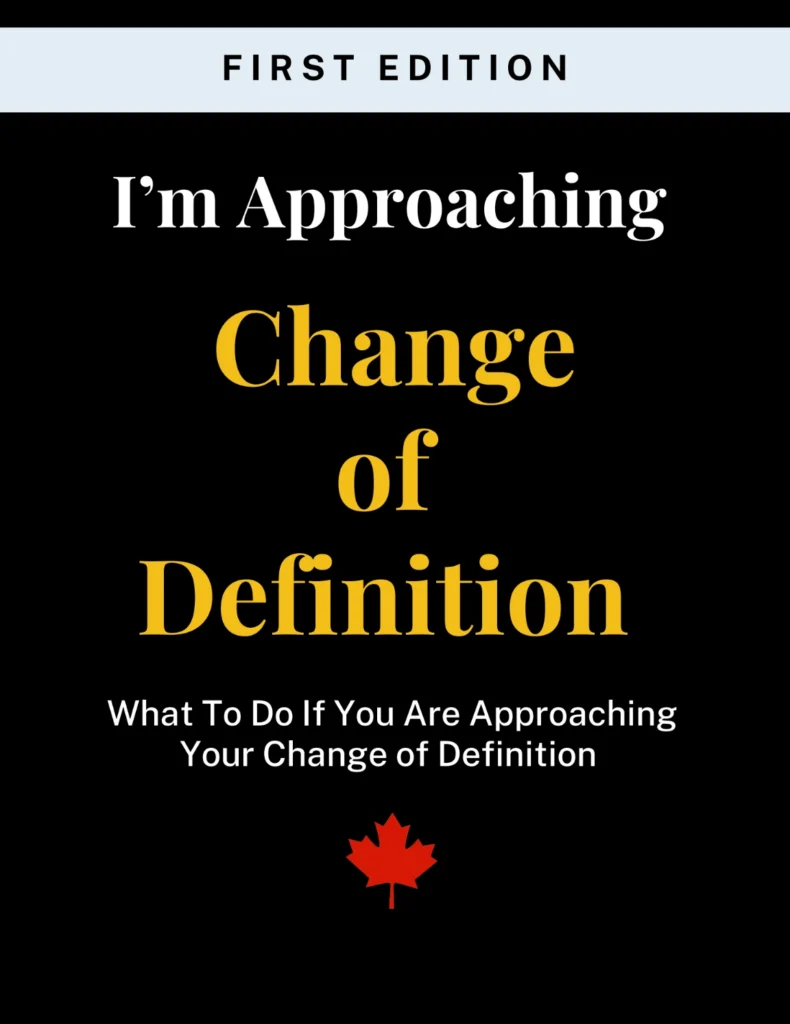
This ebook will help you:
- Understand what “change of definition” means when it comes to LTD policies
- Learn when this shift typically occurs and how it might affect your eligibility
- Know what evidence you can collect to support your continued claim
- Identify warning signs that a denial or termination might be coming
- Explore your legal options when your insurer cuts off your benefits
- Discover how a long-term disability lawyer can advocate for your rights
- And more
Download Our "Denied Long-Term Disability Benefits" E-Book
Here’s an e-book you might find useful if you’re interested in learning more about how long-term disability claims work.
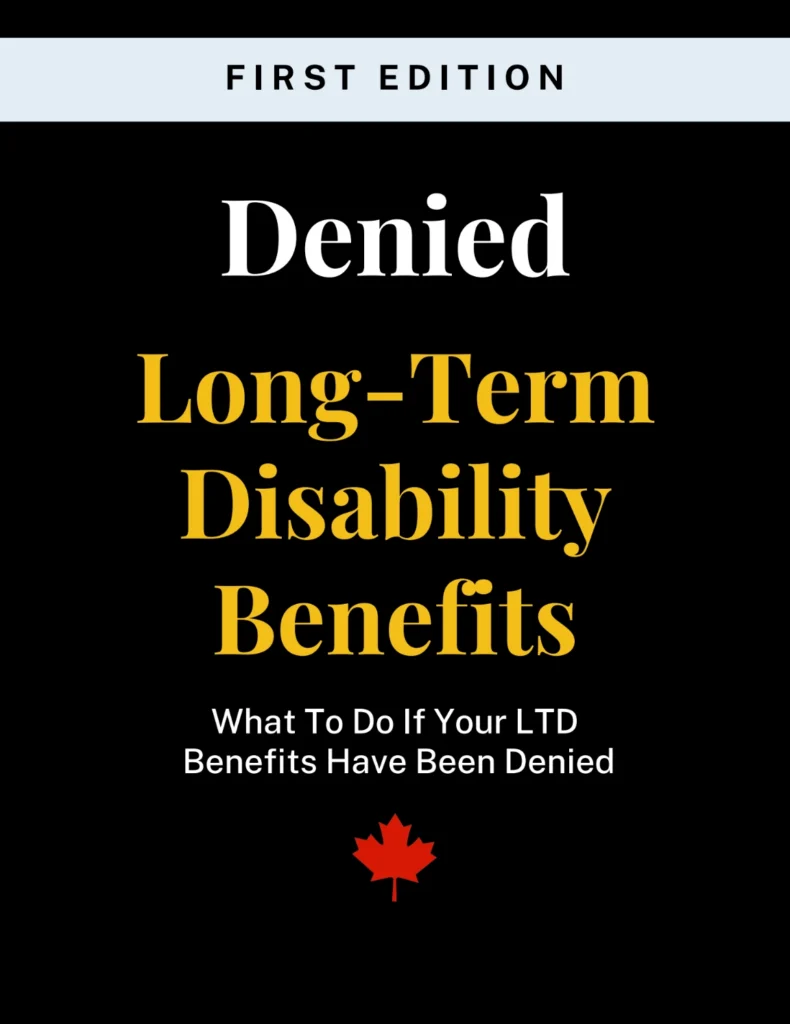
In this ebook, you’ll learn:
- Common reasons why long-term disability claims are denied in Ontario
- What to do immediately after receiving an LTD denial
- The difference between appealing a denial and filing a lawsuit against your insurer
- How to gather strong medical and occupational evidence to support your claim
- What deadlines apply to LTD claim disputes
- How our long-term disability lawyers can help you build a strong case
- What compensation you may be entitled to
- And more
Download Our "Applying for Long-Term Disability Benefits" E-Book
Here’s an e-book you might find useful if you’re interested in learning more about how long-term disability claims work.
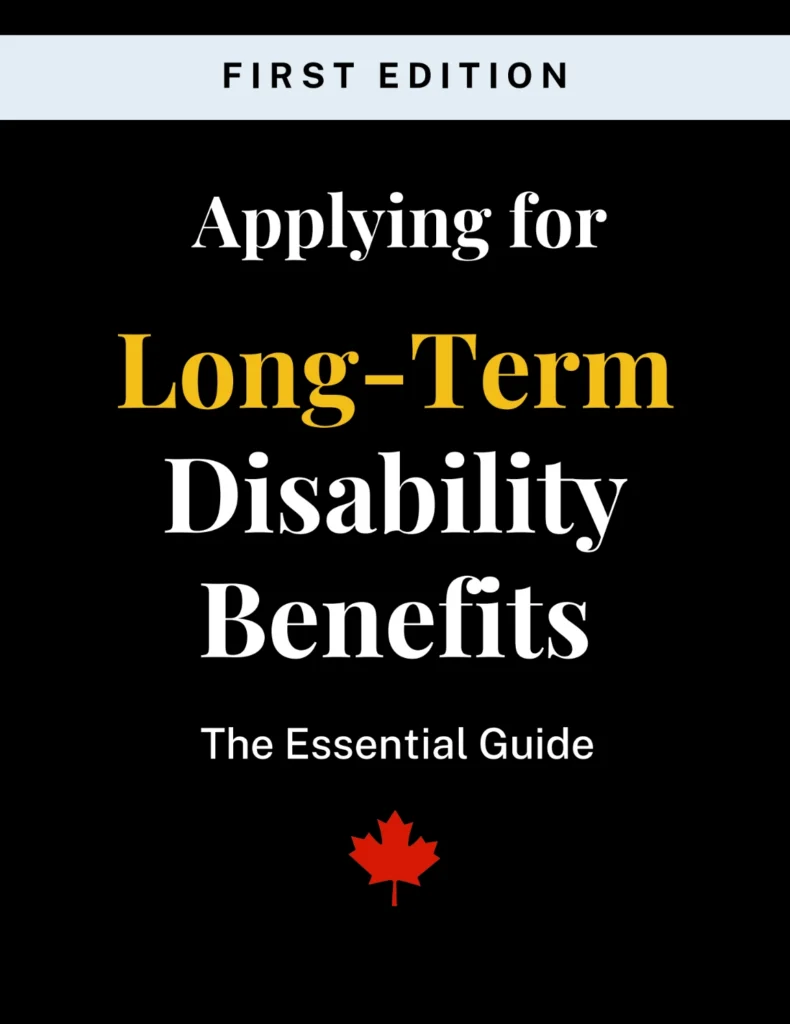
In this ebook, you can read about:
- Who qualifies for LTD benefits in Ontario
- How to effectively complete your LTD application package
- What medical and employment documentation you need to collect
- How insurance companies evaluate LTD claims
- Tips to avoid common errors that may lead to delays or denials
- What to do if your claim is denied
- How our long-term disability lawyers can support your application
- And more
More long-term disability Video Resources
We also have some videos on the topic of long-term disability claims
Learn More in Our Documentaries
Understand how our lawyers help clients fight unfair insurer denials, delays, and terminations.

car accident
When Pain is Invisible: A Documentary
A client’s story about life after a car accident, chronic pain, long-term disability benefits, insurance surveillance, and the ultimate struggle to be believed.
long-term disability FAQs
Here are some commonly asked questions for long-term disability claims
Can I appeal a CPP Disability denial?
Yes, CPP denials can be appealed through the Social Security Tribunal, which reviews applications and medical evidence.
What if my doctor doesn’t support my disability claim?
You may seek a second opinion from another qualified physician to provide additional evidence.
Can the insurance company cut off my benefits without notice?
Insurers may stop benefits if they believe you no longer meet the disability definition, but they must provide reasons.
Will my employer know about my disability claim?
Employers usually only know that you’re receiving LTD benefits, not the details of your medical condition.
What happens if I’m approved for CPP Disability benefits?
Your LTD insurer may deduct CPP benefits from your LTD payments. Approval for CPP Disability may strengthen your LTD case.
Can I work part-time while receiving long-term disability benefits?
Sometimes, policies allow partial benefits if you can work reduced hours. The rules depend on your policy language.
Can my LTD benefits be taxed?
Taxation depends on whether your premiums were paid with pre-tax or after-tax income. If your employer paid the premiums, your benefits may be taxable.
What if my employer terminates me while on disability?
Employment termination doesn’t automatically cancel your LTD benefits. Your coverage may continue as long as you were covered when you became disabled.
LONG-TERM DISABILITY BENEFITS DENIED OR CUT-OFF IN ST. CATHARINES?
Call Our LTD Lawyers for FREE Now
We take on insurance companies for you
Learn how we can challenge your denial or termination and help you secure the benefits you’re entitled to.