
February 24, 2026 | personal injury Claims
How Personal Injury Lawyers Build a Case in Ontario

Book a FREE Consultation
Tell us what happened
We’re here to help.
Table of Contents
Working with a personal injury lawyer can feel intimidating if you’ve never been involved in a legal claim before. Many injured people in Ontario are unsure what lawyers actually do behind the scenes to move a file from the first phone call to a successful settlement or trial.
This overview explains how the personal injury lawyers at Preszler Injury Lawyers typically build a personal injury case, and how each step is designed to protect your rights, prevent common mistakes that lead to claim failure, and maximize your potential recovery.
If you’ve been hurt in an accident, consider contacting our Toronto personal injury lawyers today to find out more about your legal rights and options. Initial consultations are free.
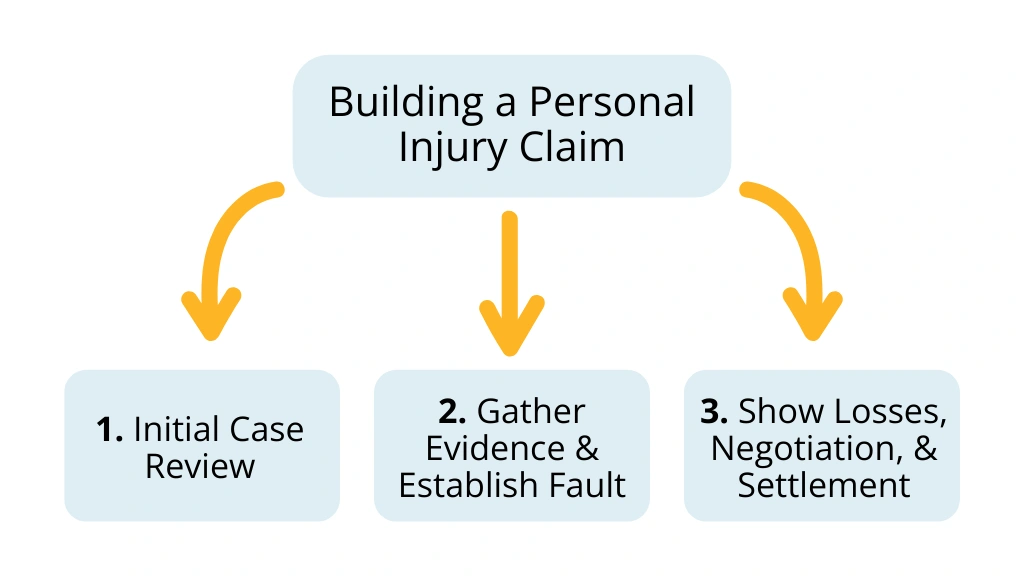
What It Means To Build A Personal Injury Case In Ontario
When a lawyer “builds a case,” they are doing much more than filling out forms. In an Ontario personal injury matter, your lawyer must usually take multiple steps to initiate the legal process.
To begin, your lawyer will investigate how the accident happened and, by doing so, determine who may be legally responsible. Once they have an idea of the amount of losses you have incurred, they can identify all potential sources of compensation that may be available, from both insurance companies and at-fault parties.
Once a personal injury lawyer has established what losses must be recovered, they can begin gathering and organizing evidence that proves both fault and the full impact of your injuries. With a robust knowledge of provincial law, a lawyer can consider important Ontario statutes like the Insurance Act and the Limitations Act, evaluating how they may apply to your situation.
In many cases, building a claim involves both a no-fault accident benefits component and, where available, a tort claim against a negligent party. For example, after a motor vehicle collision, you may have a Toronto car accident lawyer help you pursue Statutory Accident Benefits while also starting a separate lawsuit against the at-fault driver.
Step 1: Initial Consultation And Case Assessment
Most Ontario firms, including Preszler Injury Lawyers, offer free initial consultations to injured clients. During this conversation, the lawyer or intake team will typically:
- Ask how the accident happened, what injuries you have, and what treatment you are receiving
- Review basic documents you may already have, such as an accident report or medical records
- Ask about your work situation and how the injury has affected your income and day-to-day life
The goal at this stage is not to prove your case but to decide whether you may have a viable claim and what legal options might be available, such as a car accident lawsuit or a slip and fall claim.
Your lawyer will also start thinking about limitation periods. In most civil cases, the Limitations Act sets a basic two-year period to start a claim, subject to the “discoverability” principle and a 15-year ultimate deadline in many situations. Acting quickly helps your lawyer preserve evidence and avoid missing important notice dates, such as shortened deadlines that may apply in municipal slip and fall cases or certain insurance claims.
Step 2: Investigation And Evidence Gathering
Once you decide to move forward, your lawyer’s team will begin a detailed investigation. For a motor vehicle collision, this may involve coordinating your no-fault benefits under the Statutory Accident Benefits Schedule (often called “SABS”), while also preparing the foundation for a negligence lawsuit if appropriate. The evidence collection process can vary depending on the type of injury you have sustained or the kind of accident you have been involved in.
Key Types Of Evidence Personal Injury Lawyers Gather
Typical categories of evidence personal injury lawyers in Ontario may gather include:
- Liability evidence, such as police collision reports, witness statements, photos or video from the scene, maintenance logs, or incident reports from property owners
- Medical evidence, including hospital charts, diagnostic imaging, specialist reports, physiotherapy notes, family doctor records, and personal pain journal notes that document how your condition evolves over time
- Financial and functional evidence, such as proof of income loss, employment records, tax returns, housekeeping logs, and statements from family members about your daily limitations
In some claims, your lawyer may obtain surveillance, social media records, or engineering reports to respond to an insurer’s attempt to minimize your injuries or dispute how the incident happened.
Step 3: Establishing Fault And Legal Liability
Every personal injury case in Toronto has to answer a basic question: whose actions or omissions caused the injury?
Your lawyer uses the evidence gathered to apply legal concepts like negligence and occupiers’ liability. For example, in a car accident, they may rely on the Highway Traffic Act and collision reports to show that another driver disobeyed traffic rules or drove without reasonable care. In a slip and fall accident, they may argue that a property owner or occupier breached duties under Ontario’s Occupiers’ Liability Act by failing to inspect and maintain the premises in a reasonably safe condition.
Sometimes responsibility is shared among multiple parties, such as a negligent driver, a road authority, and one or more insurers. Part of building the case is making sure all potentially liable parties are identified and added to the claim before any limitation periods expire.
Step 4: Proving Your Losses And Future Needs
Showing that someone else was at fault is only half the equation of a personal injury claim. To build a strong case, your lawyer must also prove the full scope of your damages, both now and in the future.
In motor vehicle cases, this might look like coordinating your no-fault accident benefits with a tort claim to pursue additional compensation. Ontario’s SABS require insurers to provide specified benefits, including medical, rehabilitation, and income replacement benefits, to people injured in motor vehicle accidents regardless of fault.
To calculate the amount of losses you have sustained, a lawyer may collect detailed clinical notes and records from your treatment providers. They can compile reports from medical, vocational, or economic experts to help illustrate the extent of your damages. They’ll also work with you and your family directly to document how pain, psychological symptoms, or cognitive issues interfere with your daily life. All of these factors can demonstrate the effect that an accident has had on your life and will continue to have on your future.
Regulators such as the Financial Services Regulatory Authority of Ontario update guidelines that impact accident benefits, including the Minor Injury Guideline, which affects coverage limits for certain soft tissue injuries. An experienced lawyer will stay informed about these changes when advising you on settlement offers and litigation strategy.

Step 5: Negotiation, Settlement, And Trial
Once your injuries and future prognosis are better understood, your lawyer will typically prepare a settlement brief that outlines:
- The facts of the accident
- The legal basis for liability
- Supporting medical and financial evidence
- A reasoned assessment of your damages
Most Ontario personal injury claims resolve through negotiation, mediation, or pre-trial conferences rather than a full trial. However, effective negotiation depends on being ready and willing to go to court if necessary. Preszler Injury Lawyers emphasizes trial-ready strategies and has a history of representing clients in the Ontario Superior Court of Justice when a settlement cannot be reached on fair terms.
If your case does proceed to trial, the groundwork laid earlier in gathering evidence, working with experts, and meeting all procedural rules becomes essential.
Throughout this process, your lawyer should keep you informed, explain important steps in plain language, and obtain your instructions before accepting or rejecting any settlement offers.

Speak With A Toronto Personal Injury Lawyer Today
If you or a loved one has been injured in an accident anywhere in Ontario, you do not need to navigate insurance forms, limitation periods, and legal arguments on your own.
Our Toronto personal injury lawyers at Preszler Injury Lawyers focus exclusively on representing injured people and those facing denied disability benefits. With over 60 years of experience serving clients across Ontario, the firm offers free initial consultations, contingency fee arrangements, and personalized service.
To learn how a lawyer can help build your case from day one, contact Preszler Injury Lawyers at 1-888-608-2111 or use the firm’s online contact form to schedule a free, no obligation consultation.
There is no cost to call and ask questions about your situation, and speaking with a lawyer as early as possible can help you understand your rights and the next steps in protecting your potential claim.
Written by Jeffrey A. Preszler
Personal Injury Lawyer
Partner Jeffrey Preszler’s practice focuses on personal injury claims, including motor vehicle accident claims, slip and fall claims, long-term disability claims, and institutional abuse claims.
More personal injury Topics
Here’s more information on personal injury related topics that we think you might find helpful.

car accident
|
March 30, 2026
Can I Still Make a Claim if the Accident Was My Fault in Ontario?
At Preszler Injury Lawyers, our team hears very often: “I was involved in an accident, but it was my fault. I have no claim, Right?”…

personal injury
|
March 27, 2026
Three Reasons Personal Injury Claims Fail in Ontario
Personal injury law is a safety net designed to catch those who have suffered physical or psychological harm due to another person’s wrongdoing or negligence….

personal injury
|
March 27, 2026
How to Create a Personal Injury Pain Journal
When you are in pain caused by an accident, especially the chronic type, you’ll do everything you can to avoid thinking about it. Doctors may…
Speak With Our
Legal Team for FREE
Find Out if You Have a Case in Under 5 Minutes
Speak to a Lawyer Now!
We’re here to help.