
February 24, 2026 | car accident Claims
What Critical Evidence Do I Need for a Toronto Accident Claim?

Book a FREE Consultation
Tell us what happened
We’re here to help.
Table of Contents
The chaotic moments after a crash on the Gardiner Expressway or a busy Scarborough intersection can leave you disoriented. Your priority after an accident is your health and well-being, but that doesn’t remove the reality that insurance adjusters begin investigating your accident and evaluating your potential claim almost immediately.
Any claim you file for injuries and losses requires the right proof to maximize and protect its value. Many accident victims wonder what critical evidence is needed for a Toronto accident claim to secure full and fair compensation.
If you’ve been injured by a negligent or reckless driver, you are not expected to be a detective. A personal injury lawyer can step in to secure fleeting evidence, including traffic camera feeds and witness statements, before they vanish.
Key Takeaways: Critical Evidence and Reporting Protocols in Toronto
- The reporting threshold has changed: As of 2025, you only need to report property-damage collisions to police if the combined damage exceeds $5,000, though injury accidents must always be reported.

- TTC footage disappears quickly: Video fromstreetcars and buses is often overwritten within hours, making immediate preservation requests essential.
- Your location dictates the procedure: Toronto has specific Collision Reporting Centres (CRCs) like Toryork and Howden Road, where you must bring your vehicle if police do not attend the scene.
- “No-Fault” does not mean no liability: You still need strong evidence to prove the other driver was negligent for your Tort claim, even while collecting SABS benefits.
- Truck data is time-sensitive: Commercial trucks carry “black boxes” (ELDs) that record speed and braking data, but this evidence can be lost if not secured by a lawyer immediately.
The “Golden Hour” of Evidence Collection
The physical state of the crash scene tells a story that police reports sometimes miss. In Toronto’s high-density traffic, physical evidence can be swept away or distorted by ongoing commuter flow within minutes.
While your health is the absolute priority, understanding what evidence carries the most weight can help you or a family member know what to preserve or request later. A personal injury lawyer can also help preserve evidence before it vanishes, which is one reason why securing legal representation immediately is essential.
Photos and videos: context is key
A simple photo of a dented bumper rarely explains how the accident happened. The most compelling visual evidence captures the broader context of the roadway:
- The Intersection Layout: At complex intersections like Lake Shore Boulevard and Spadina Avenue, photos that show lane markings, traffic signals, and “No Turn” signs establish the rules of the road at that specific moment.
- Sightlines and Obstructions: If a delivery truck was illegally parked in a bike lane on Richmond Street, forcing a merge, photo evidence of that temporary obstruction is vital for proving why a maneuver was necessary.
- Skid Marks and Debris: On high-speed routes like Highway 401 or the Don Valley Parkway, skid marks can reveal if a driver attempted to brake or was distracted.
- Weather Conditions: Toronto’s weather is unpredictable. Photos proving the roads were unplowed or icy can be crucial for establishing liability against municipal maintenance contractors or motorists who failed to adjust their driving to road conditions.
Accident victims are not always able to gather this evidence at the scene. In many of those cases, a lawyer can work with specialists to fill in the gaps. Accident reconstruction experts can often use surveillance footage, black box data, and police photos to piece this puzzle together after the fact.
Securing TTC and dashcam footage
Public transit vehicles are ubiquitous in Toronto, and they are constantly recording. If an accident occurs near a streetcar on Queen Street or a bus in North York, there is a high probability that the collision was captured on video.
However, the Toronto Transit Commission (TTC) typically overwrites this footage within hours unless it is flagged. Because this evidence is so fleeting, it is often one of the first things a lawyer will attempt to secure.
- Vehicle Identification: If a family member or witness noted the 4-digit number of a nearby TTC vehicle, pass that information to your legal team immediately.
- Preservation Requests: A lawyer can send an urgent preservation letter to the TTC legal department to stop the deletion cycle, securing an objective view of the crash.
Similarly, many Toronto drivers use personal dashcams. Footage from a third-party witness is often the “smoking gun” in liability disputes, cutting through “he-said, she-said” arguments.
Navigating Toronto’s Collision Reporting Centres (CRC)
In many Toronto accidents, police will not attend the scene unless there is a significant injury or criminal activity (like impaired driving). Instead, you will be directed to a Collision Reporting Centre (CRC).
The New Reporting Threshold
Recent changes to Ontario law raised the threshold for mandatory reporting of property-damage-only collisions from $2,000 to $5,000 in combined damage.
- If you are injured: You must report the accident regardless of the damage value. Never let another driver talk you out of reporting if you feel pain, even if it seems minor.
- The “Sticker” Procedure: When you report to a CRC, police will photograph your vehicle and apply a “Damage Reported” sticker. This sticker is often required by auto body shops before they can begin repairs.
Where to Go in Toronto
You must attend the CRC in the jurisdiction where the collision occurred. In Toronto, the two primary locations are:
- North York CRC: Located at 113 Toryork Drive (near Weston Road and Finch). This serves collisions happening in Etobicoke, North York, and the western parts of the city.
- Scarborough CRC: Located at 39 Howden Road (near Lawrence and Warden). This is the designated centre for accidents in Scarborough and the eastern GTA.
Pro Tip: These centres can have long waiting times. If your car is drivable, avoid peak rush hours.
How Does Ontario’s “No-Fault” System (SABS) Work?
Ontario’s insurance system is often misunderstood. “No-Fault” does not mean no one is to blame; it means you claim specific medical and income benefits from your own insurer, regardless of who caused the crash. These are called Statutory Accident Benefits (SABS).
To access these benefits, you need specific evidence to prove your eligibility:
- Income Replacement Benefits: You must provide pay stubs, tax returns (T4s), or bank statements from the 52 weeks prior to the accident to prove your income level.
- Non-Earner Benefits: If you are a student (e.g., at U of T or York University) or unemployed, you need school transcripts or enrollment records to prove your status.
- Attendant Care Benefits: If you need help with daily tasks, a Form 1 (Assessment of Attendant Care Needs) must be completed by an Occupational Therapist.
While SABS provides immediate support, it is rarely enough to cover long-term losses. This is why you also file a Tort Claim against the at-fault driver. In the Tort claim, evidence of the other driver’s negligence, such as photos and witness statements gathered at the scene, becomes the foundation of your case. One of your Toronto car accident lawyer’s primary responsibilities is to support both your SABS and Tort claims with irrefutable proof.
Commercial Truck Accidents: The “Black Box” Factor
Collisions involving commercial freight carriers on major arteries like the 401 or the QEW are legally distinct from standard car crashes. Semi-trucks and other heavy commercial vehicles are governed by strict federal and provincial regulations that generate a massive trail of data if you know where to look.
Unlike a typical passenger car, commercial trucks are equipped with Electronic Logging Devices (ELDs) and often onboard telematics systems (informally called “black boxes”). This data is critical because it records the truck’s speed, braking patterns, and engine RPMs in the seconds leading up to a crash.
However, trucking companies own this data. Without a preservation letter from a Toronto truck accident lawyer sent immediately after the crash, the company may legally reset the system or “lose” the data.
Critical Evidence for Truck Claims:
- Logbooks: Proof of Hours of Service compliance to check for driver fatigue.
- Maintenance Records: Was the truck roadworthy?
- Load Manifests: Was the cargo unsecured or overweight?
A comprehensive review of these documents often reveals whether the accident was a momentary lapse or the result of systemic safety violations by the trucking company.
Evidence for Vulnerable Road Users in Toronto Collisions
In downtown Toronto, particularly along bike-friendly corridors like Richmond and Adelaide, the interaction between vehicles and cyclists is a constant source of conflict.
Cyclists and the One-Meter Rule
Under the Ontario Highway Traffic Act (Section 148), drivers must maintain a minimum distance of one meter when passing a cyclist. Proving a violation of this rule often requires video evidence or specific witness accounts regarding the vehicle’s lateral position in the lane.
If you are struck while riding, preserving the physical state of your equipment is vital. Your damaged helmet, torn clothing, and bent bicycle frame serve as proof of the force of impact. Do not repair your bike until your bicycle accident lawyer has documented the damage.
Pedestrians and right-of-way
For pedestrians struck at intersections or other areas, such as the notoriously dangerous King Street West and Bathurst Street, evidence often centers on traffic signal timing. Your legal team may request traffic signal timing reports from the City of Toronto to prove you had the walk signal when the driver turned into your path.
What About Motorcycle and Snowmobile Claims?
When you lack the protection of a passenger car, the nature of the evidence you need changes. Riders often face unfair biases regarding speed or recklessness, making it vital to secure specific proof that demonstrates you were operating your vehicle safely and legally.
Motorcycles: Filtering and visibility
Motorcyclists face unique hazards and biases. Insurers often assume riders were speeding or weaving. Evidence to the contrary is essential. If you were injured while navigating traffic on the Don Valley Parkway or anywhere else in the Greater Toronto Area, helmet-cam footage and traffic surveillance video are your best defense against claims that you were riding recklessly.
A motorcycle accident lawyer uses this footage to fight bias and assumptions of fault to show you were driving responsibly.
Snowmobiles: Trail permits and conditions
While Toronto is an urban center, many residents travel north to Barrie or Muskoka for winter recreation. Accidents on OFSC (Ontario Federation of Snowmobile Clubs) trails often involve issues of trail maintenance or signage.
Critical evidence here includes your valid trail permit (to establish your right to be there) and immediate photos of the trail conditions (groomed vs. ungroomed, hazard markings) before weather changes obscure the scene. Our snowmobile accident lawyers often work with accident reconstructionists to map these remote scenes.
Frequently Asked Questions About Building Your Toronto Accident Case
Can I use footage from a nearby business if the police didn’t get it?
Yes. Many businesses along busy routes like Yonge Street or Eglinton Avenue have security cameras pointing toward the sidewalk or road. However, store owners are often hesitant to release footage to individuals due to privacy concerns. They are much more likely to release it in response to a formal request from a law firm. This evidence is time-sensitive; many systems overwrite footage every 48 to 72 hours.
What if I didn’t see a doctor immediately after the crash?
Gaps in medical treatment are one of the biggest challenges in Toronto motor vehicle accident claims. If you waited a few days because you thought the pain would go away, the insurer might argue your injuries were caused by something else in the interim.
You can counter this with “lay witness” evidence—statements from family or coworkers who observed your limp, your inability to lift objects, or your complaints of pain in the days between the accident and your doctor’s visit.
Does the weather affect who is at fault?
Drivers often blame “sudden black ice” or heavy snow to avoid liability. However, the Highway Traffic Act requires drivers to drive according to the conditions, not just the speed limit.
Evidence such as weather reports from Environment Canada for the specific hour of your crash, combined with photos of unplowed roads, can actually strengthen your claim. It helps establish that a reasonable driver would have slowed down significantly, and the defendant failed to do so.
How do I prove lost income if I am self-employed or a gig worker?
For Uber drivers, freelancers, or contractors, T4 slips do not exist. In these cases, evidence for personal injury claims in Toronto must be more creative. You will need to provide bank deposit records, invoices, contracts that were cancelled due to your injury, and even app-based earnings logs (like Uber or DoorDash history) to establish your pre-accident average weekly earnings.
Securing Your Future After a Collision in Toronto
The days following an accident are a blur of pain, appointments, and paperwork. But they are also the most critical window for gathering the Toronto accident claim evidence that will support you for years to come. You do not have to scramble to find camera angles or interview witnesses while you are trying to recover.
If you or a loved one has suffered a catastrophic injury due to negligence in the GTA, contact the trial lawyers other attorneys trust to handle challenging, high-stakes cases. Call Preszler Injury Lawyers or contact us online for a free, confidential consultation to discuss your case. We handle the evidence so you can focus on your recovery, and there’s never a charge unless we secure compensation for you.
Blog Categories
More car accident Topics
Here’s more information on car accident related topics that we think you might find helpful.

car accident
|
February 24, 2026
Common Mistakes People Make After Car Accidents in Ontario
Few events are as stressful as a sudden car accident. In the confusion, it is easy to make split-second decisions that seem harmless at the…
car accident
|
February 23, 2026
Navigating Liability in Mixed-Vehicle Collisions
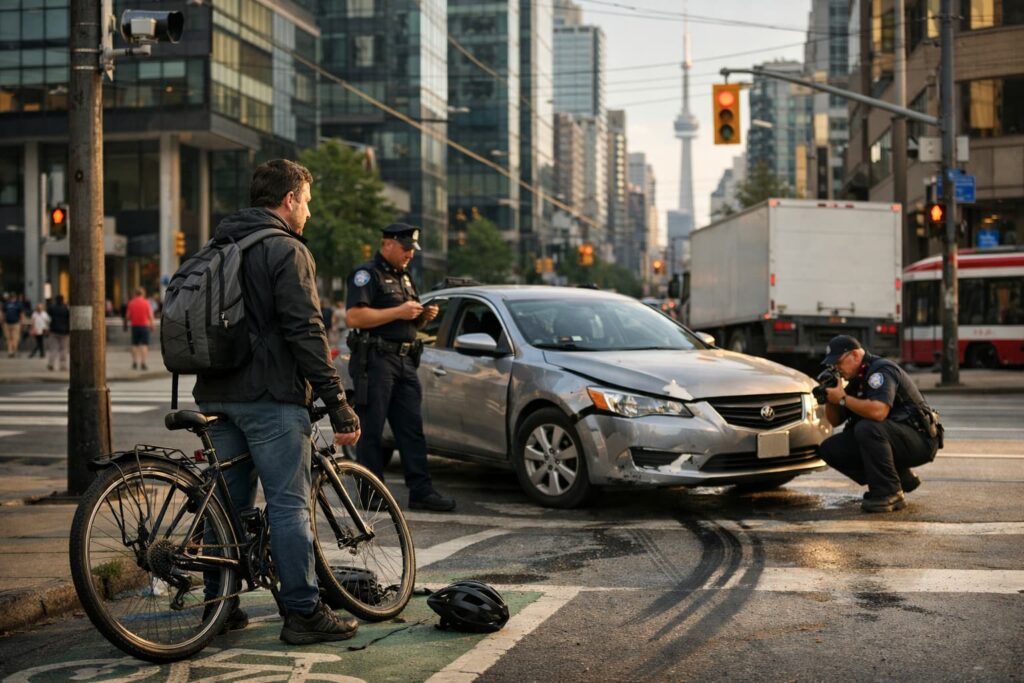
Toronto’s streets are denser than ever, forcing heavy trucks, passenger cars, cyclists, and pedestrians to share tight spaces in corridors like Richmond and Adelaide. When…
car accident
|
January 21, 2026
Single-Vehicle Accidents: Can You Still Claim Compensation?
You may still be eligible for compensation after a single-vehicle accident, even if you were the only driver involved. Ontario’s no-fault insurance system allows injured…
Speak With Our
Legal Team for FREE
Find Out if You Have a Case in Under 5 Minutes
Speak to a Lawyer Now!
We’re here to help.